By Lauren Witt, Legal & Policy Intern
Climate scientists predict this winter will bring "Super" El Niño weather patterns to California. Here’s how your community can prepare.
What is El Niño?
You have probably already heard the buzz: California coastal communities are bracing for a Super El Niño season. El Niño, a naturally occurring climate phenomenon, warms Pacific Ocean surface temperatures and brings heavier rainfall across the West Coast during the winter months. Scientists are predicting that this winter season may bring Super El Niño conditions, where ocean surface temperatures are up to four times higher than in a normal El Niño year, yielding even stronger atmospheric rivers and raising coastal water levels, potentially amplifying king tides, winter flooding, and landslides.
This year, El Niño conditions will overlap with two marine heatwaves in the northeastern Pacific. Marine heatwaves are an effect of human-caused climate change where temperatures in certain areas of the ocean remain higher than normal for extended periods of time. Hotter ocean temperatures can cause kelp and seagrass dieback, algal blooms, and disruptions to marine animal populations as prey species habituated to colder water die off or move to deeper habitats farther from the coast.
These dual climate events may cause an even greater disruption to coastal communities and ecosystems, including in West Marin. While the Super El Niño is not anticipated to amplify ocean surface temperatures in heatwave zones, it will result in surface warming lasting for a prolonged period of time, extending and potentially worsening the impacts that marine heatwaves already have on marine life. Marine heatwaves, like El Niño conditions, can increase rainfall and cause atmospheric rivers, as warmer surface temperatures lead to greater evaporation of moisture into the air. These two events coinciding demonstrates the compounding effects of climate change, where multiple extreme weather events occur at the same time.
El Niño Impacts in Marin and the Bay Area
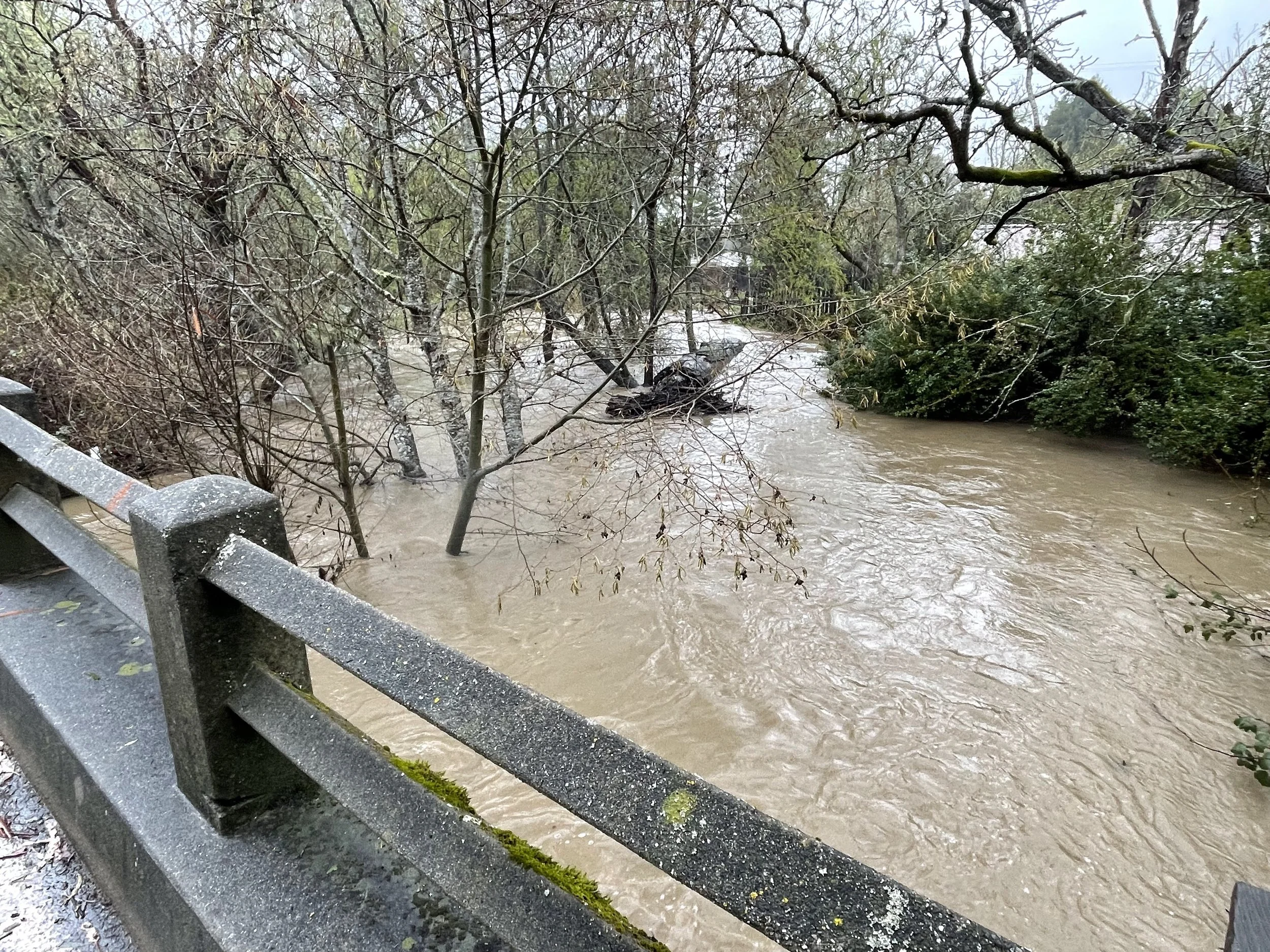
When the ocean warms, sea levels rise—up to one foot along the California coast during this El Niño season. King tides, the peak of the tidal cycle, will coincide with El Niño conditions, causing further tidal inundation in coastal communities. El Niño storms can also bring sequential atmospheric rivers, with back-to-back storms making immediate recovery and remediation more difficult. As a result, Northern California coastal communities may see flooding, mudslides, power outages, road closures, and coastal erosion. West Marin often already experiences these impacts during winter months.
How you can Prepare
As Marin prepares for a wetter winter, here are some actions that you can take to help your community stay safe:
Sign up for AlertMarin.
Check the Public Emergency Portal for emergency updates.
Get involved with and find resources through a local disaster council, like the Point Reyes Disaster Council.
Learn how to prepare for flooding, including clearing gutters, making an emergency plan, and more. Find more info on this Coastal Commission page.
Obtain sandbags before a storm. The County offers sand and sandbags at multiple locations (bring a shovel!).
Attend an El Niño town hall or review a recap of a town hall meeting.
Connect with your neighbors to ensure that vulnerable community members are supported in case of an evacuation.
In case of a power outage in West Marin, tune into KWMR for radio updates (90.5 FM Point Reyes, 89.9 FM Bolinas, or 92.3 FM San Geronimo Valley). We are a proud sponsor of KWMR local radio.
Consider following West Marin Feed for local updates.
Keep your distance from coastal areas and creeks during heavy or sequential storms, especially those without flood control zones, to avoid flood hazards.
Turn around rather than driving through flood water. Saltwater flooding from king tides is especially damaging to cars as it can corrode metal and electrical components.
Tackling the causes of climate warming, which create unusual atmospheric events like marine heatwaves and compound the impacts of other weather events, is a crucial component of climate-resilient community planning. Central to this is drawing down greenhouse gas emissions and decreasing reliance on fossil fuels. We previously participated in Drawdown Marin, which morphed into MarinCan, where you can learn about Marin County’s efforts to achieve carbon neutrality.
For additional resources on climate change and environmental action in Marin, check out our Climate Change page. Want to educate your community? Borrow our Climate Exhibit. Coastal resiliency and education are our priorities, including promoting strong local and regional policy and nature-based solutions like blue carbon sequestration, wetland, and dune restoration.