What’s the Issue?
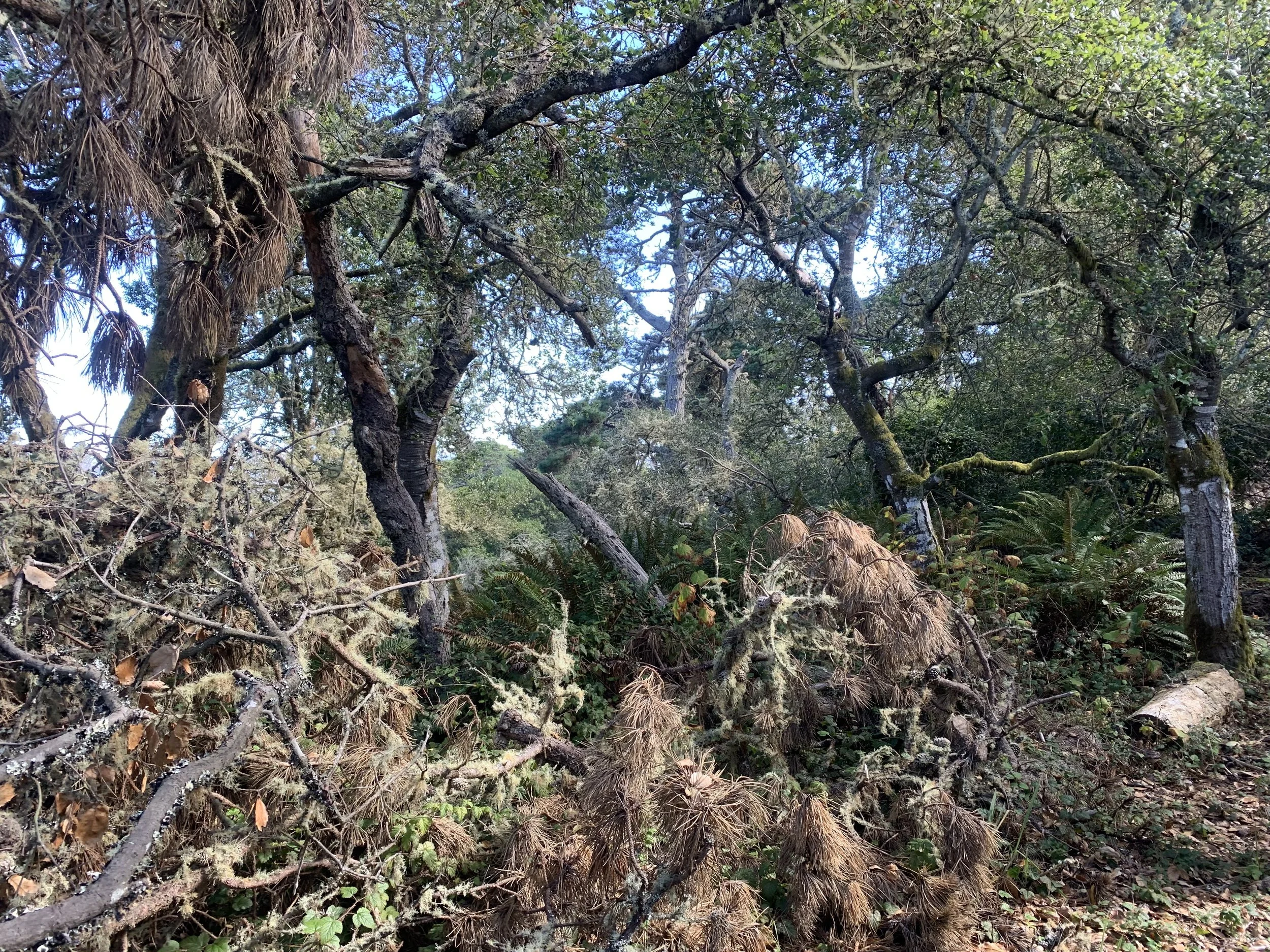
In 2019, a forest health inventory of Tomales Bay State Park revealed a need for ecological restoration of its declining Bishop pine and hardwood forests. Fire suppression and the accumulation of woody debris and litter over the last century have made forest regeneration difficult, as Bishop pine seeds need bare soil to sprout. These aging trees are susceptible to disease and invasion, with many in the park already dead and dying. Additionally, habitat for mammals and birds like the northern spotted owl is at risk if a crown fire occurs due to fuel buildup.
After almost two years of planning and public comment opportunities, the Tomales Bay State Park Forest Health and Wildfire Resilience Public Works Plan (PWP) was approved in 2024 to address these forest health and wildfire risk issues.
While implementation of the PWP has not begun (as of May 2026, only surveys were being conducted), a recent article and petition advocating for no Roundup or herbicide usage in the Tomales Bay Watershed have caused much local concern. Note: from a conversation with State Parks staff, they continue to be in the survey and monitoring stage as of June 2026, with no expected implementation date.
Cause for Concern?
Herbicide application is mentioned as one of the five possible treatment options Tomales Bay State Park may use for the project. Other treatment methods include prescribed burning, mechanical treatment, manual treatment, and prescribed herbivory (Section 3.4.4). The PWP also says this may occur on up to 6 acres over the next 10 years. Learn more under the section “What do the PWP and Addendum Say About Herbicide Usage?”
It’s important to think of the PWP as a “toolbox” rather than a prescriptive plan that mandates herbicide usage in certain places. The inclusion of herbicides in the plan simply means it is a tool that could potentially be used, but may not necessarily be used. There is built-in flexibility for non-herbicide alternatives to be used, which EAC has and will continue to advocate for.
EAC’s Stance
While EAC has been generally supportive of the PWP due to the degraded state of Tomales Bay State Park, we have raised concerns about herbicide usage since the beginning. Our January 2024 letter noted, “We urge you to minimize to the greatest extent possible the use of herbicides, and to use them only to treat invasive species where no other treatment is practical." Our testimony to the California Coastal Commission in April 2024 noted: "[W]e strongly advocate for the minimal use of herbicides in this project, urging their deployment only in cases where invasive species pose an insurmountable challenge through other treatment means." Specifically, we update that position to oppose any use of herbicides in the PWP, including glyphosate.
Why Are We Strengthening Our Stance?
Glyphosate as a Carcinogen: The International Agency for Research on Cancer lists glyphosate as “probably carcinogenic to humans,” and California’s Proposition 65 also lists it as a carcinogen. Additionally, in 2025, one of the hallmark studies that claimed there was no evidence that glyphosate caused cancer was retracted due to ethical concerns about authorship (Monsanto employees may have contributed to its writing) and the validity of the findings.
Precedent and Alignment with Other Policies in Marin: Multiple cities in Marin have banned glyphosate usage and/or severely restricted the usage of herbicides, including San Rafael, Novato, Mill Valley, Larkspur, and more. See which countries and California cities restrict usage. Marin County Parks has also eliminated the use of glyphosate, and the Marin Municipal Water District uses no herbicides in its Biodiversity, Fire, and Fuels Integrated Plan, which focuses on restoring forest health, conserving habitat by reducing invasive plant spread, and improving wildfire resilience on its managed lands. Additionally, the County of Marin’s Integrated Pest Management Policy also prohibits the use of pesticides containing ingredients on California’s Prop 65 list (which includes glyphosate). The Policy seeks to use the least-toxic methods. While Tomales Bay State Park is not under Marin County’s jurisdiction, it is clear that many of the jurisdictions and agencies within the County have moved, or are moving towards, the reduction or elimination of herbicides.
Our Goal: We hope our strengthened position will further encourage State Parks to explore non-herbicide alternatives for invasive species management within the PWP.
What do the PWP and Addendum Say About Herbicide Usage?
Invasive Species to be Treated: Examples of invasive species that are “likely” to be treated include jubata grass, cape ivy, eucalyptus, French broom, and acacia, as well as “additional invasive species [that] would be would be treated as necessary to prevent their spread and protect native habitat.”
Location: Herbicide application would occur on less than 6 acres in “targeted” and “discrete” locations over the next 10 years (the duration of the PWP). This does not mean herbicide usage absolutely will happen in all of these places, nor that herbicide application would amount to 6 acres in the end. Natural resource surveys to understand the conditions on the ground and the consideration of other methods still need to occur.
Application Methods: These consist of targeted ground-based application methods, including cut-stem, basal bark, and foliar spraying using manual application equipment like backpack applicators or hypo-hatchet tree injection. Additionally, “only herbicides labeled for use in aquatic environments” would be used in places where those herbicides could contact water. Herbicides would be applied “only during low-flow periods or when seasonal streams are dry” and would not be used in Watercourse and Lake Protection Zones. Note that “aerial spraying” of herbicides is NOT proposed in this plan.
Some images are included below as examples of what these types of application methods look like. Note: these are from other locations, as State Parks has not started PWP implementation.
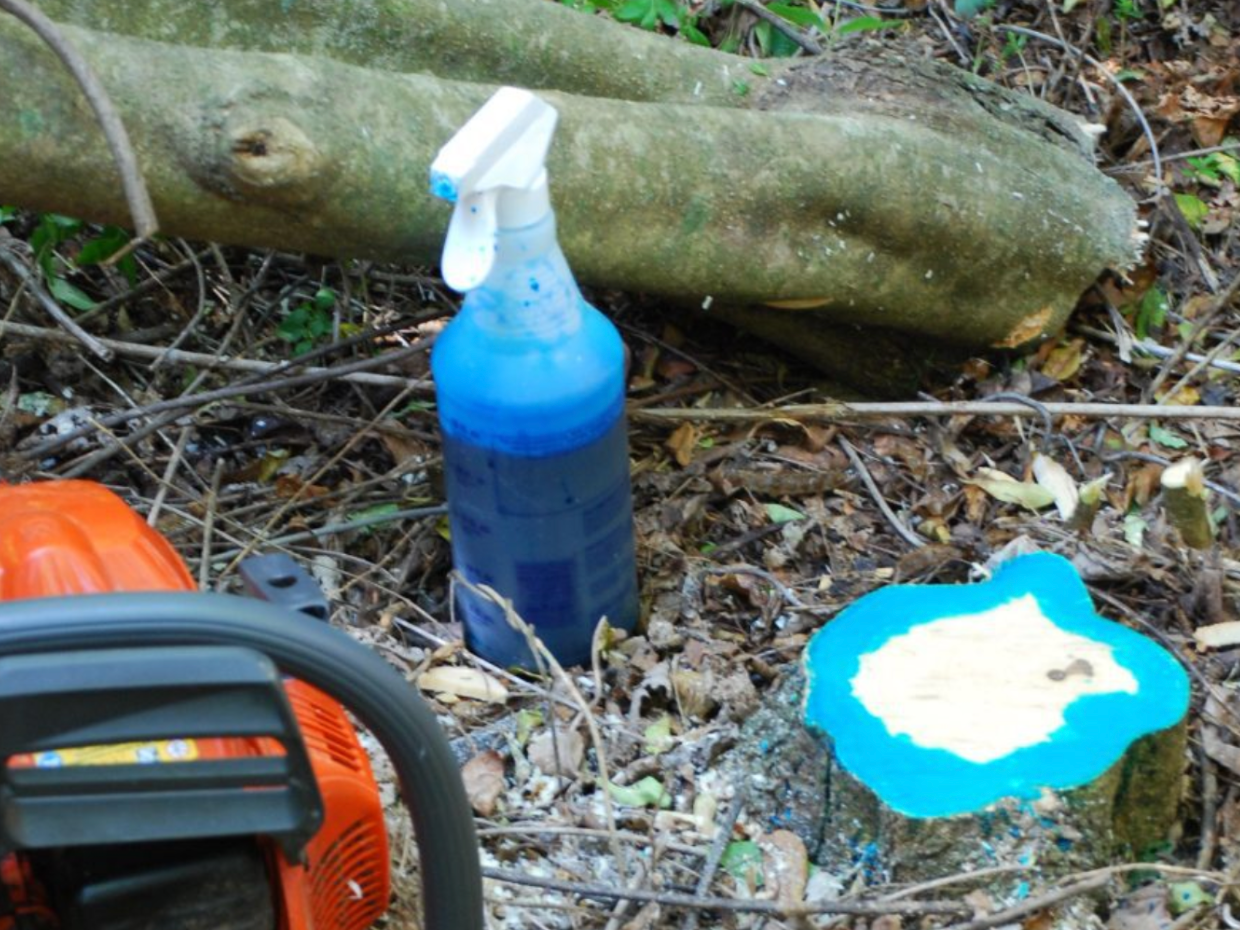
Example of cut-stem/stump herbicide treatment. Image source.
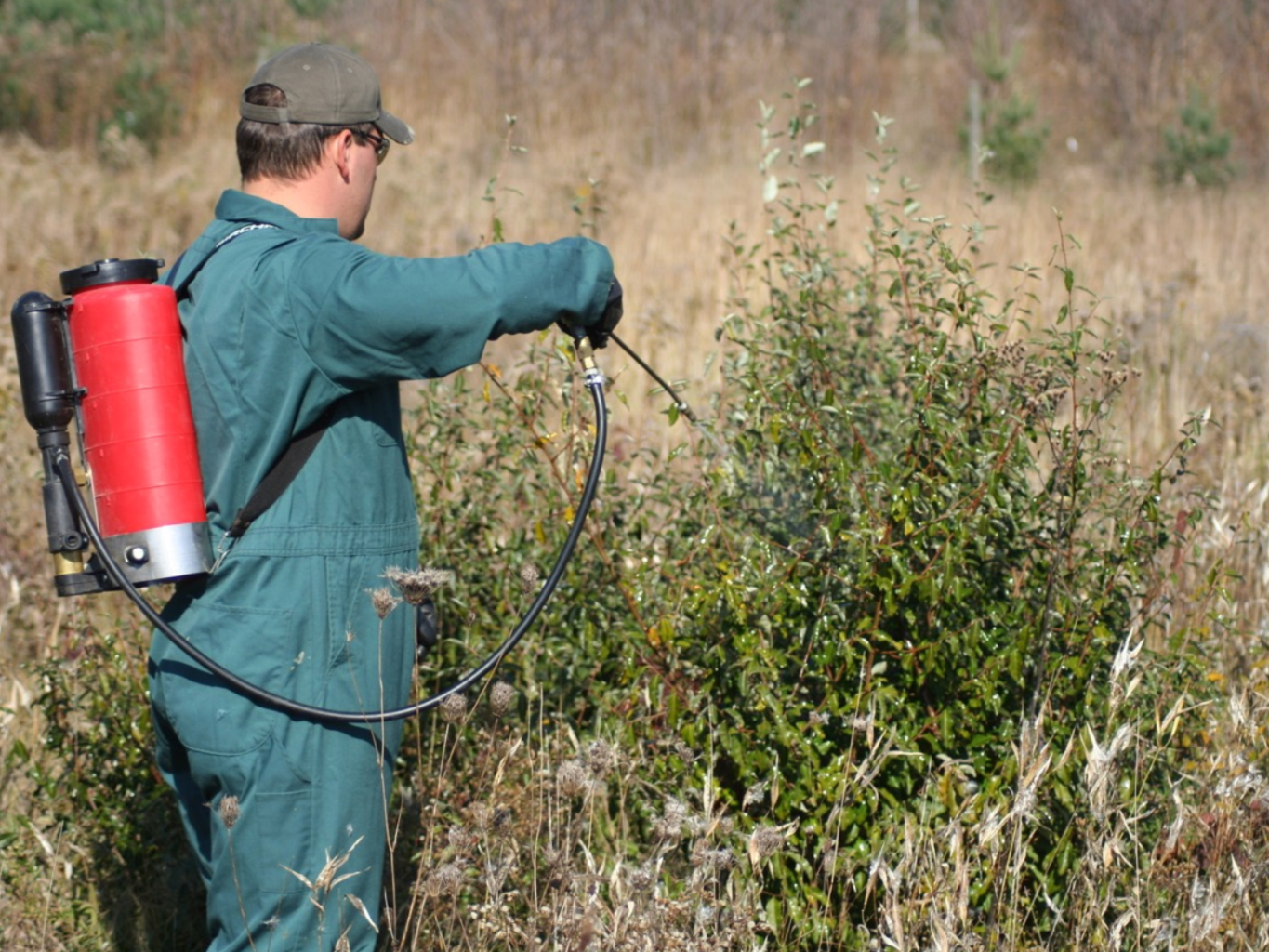
Example of foliar spraying using a backpack applicator. Image source.
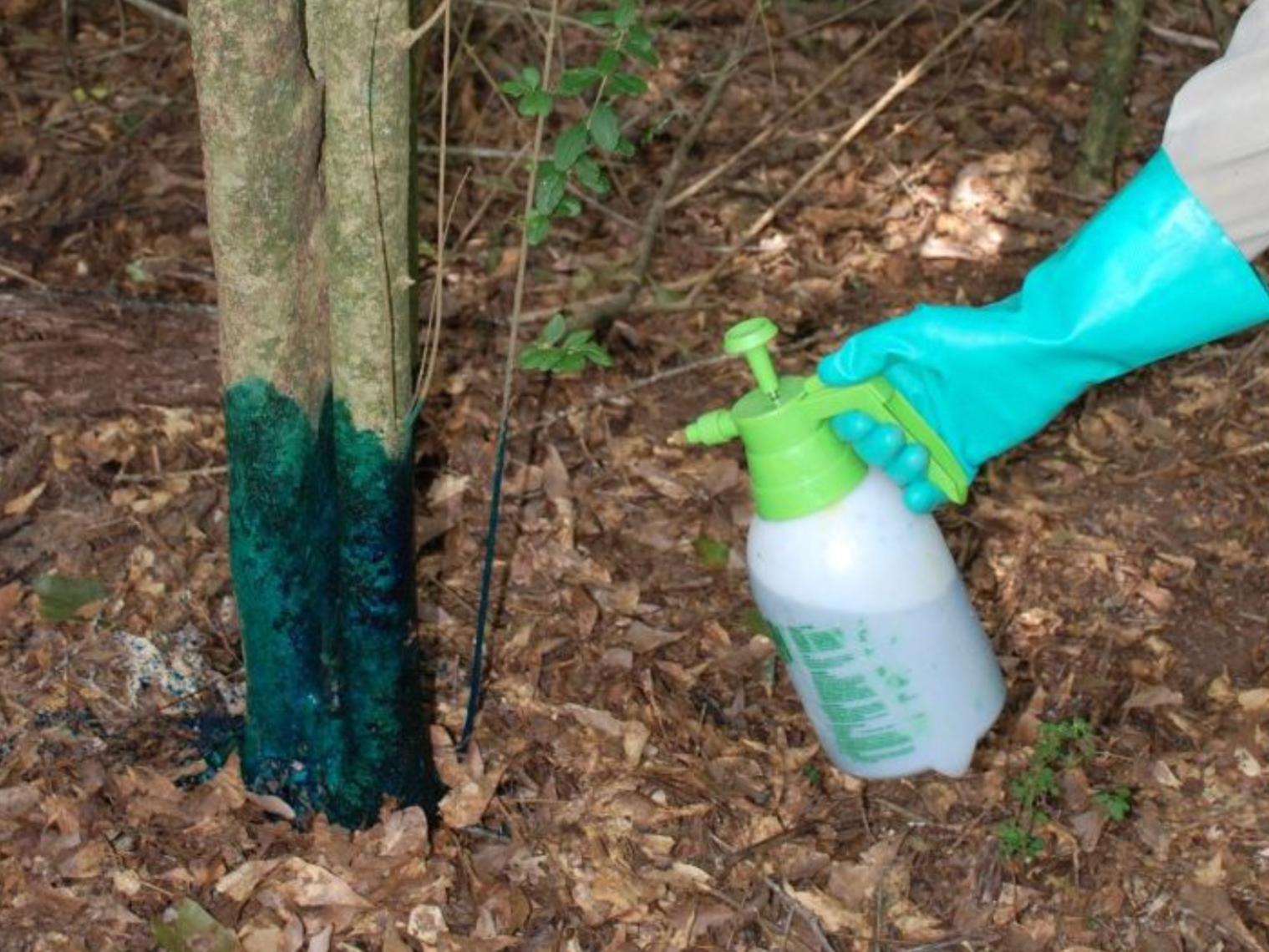
Example of basal bark herbicide treatment. Image source.
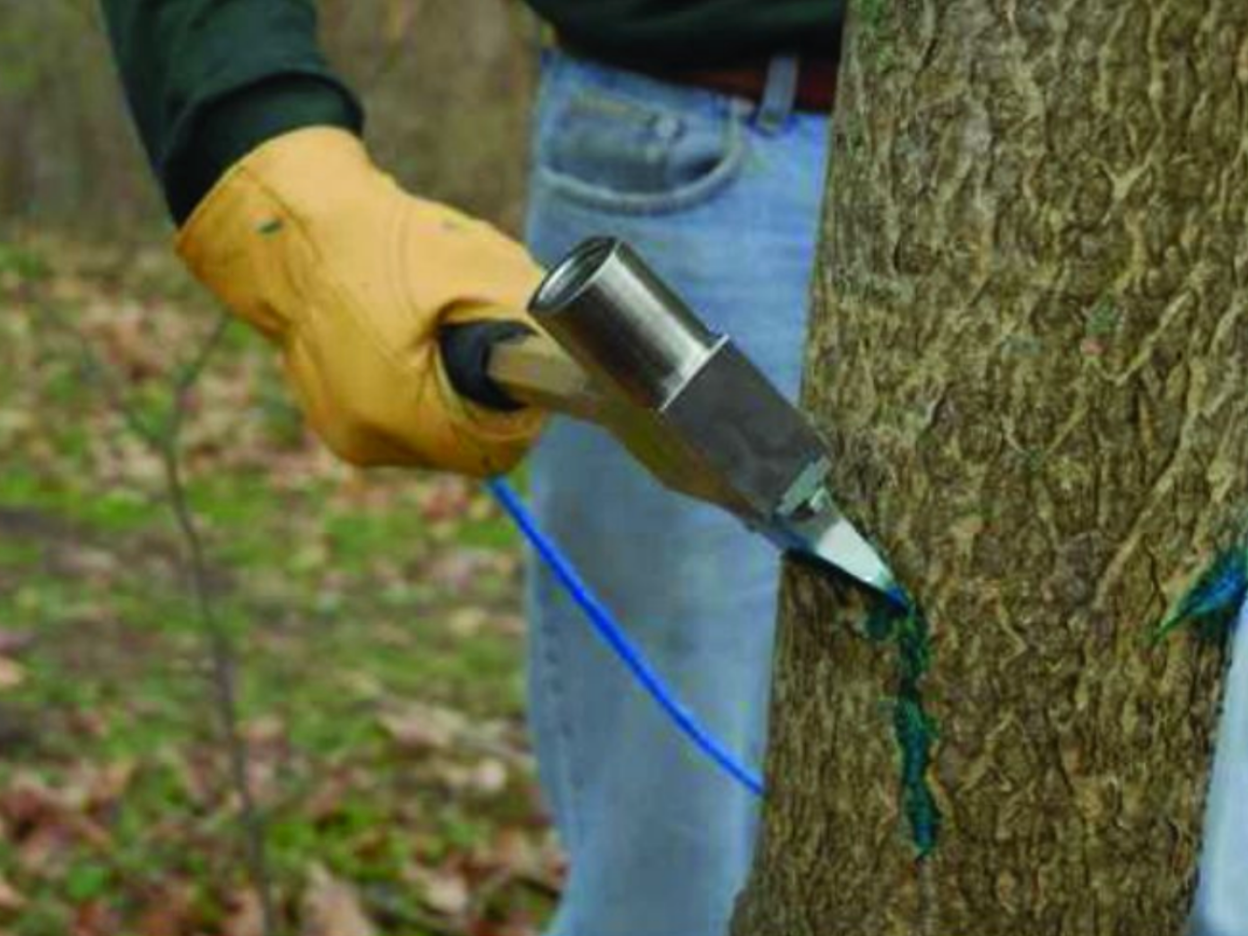
Example of Hypo-Hatchet tree injection. Image source.
Herbicides Proposed for Use in the PWP: These herbicides “may” be used: Clopyralid (monoethanolamine salt), Glyphosate (isopropylamine salt, potassium salt, dimethylamine salt and diammonium salt), Imazapyr (isopropylamine salt), and Triclopyr (butoxyethyl ester and triethylamine salt). These are the tools in the toolbox, but that doesn’t mean they will all be used. Each of these herbicides have different properties and toxicity levels.
Current Project status
As of May 2026, project treatment activities have not started as staff are conducting natural resource and tribal cultural resource surveys. There is no timeline for implementation of the PWP.
What Else is EAC Doing About Reducing Harmful Chemicals & What Else Can You Do?
Learn more about legislation locally or in California. Take Action by calling your CA representative to share concerns.
EAC supports AB 1603 (Schultz), which would phase out PFAS pesticide usage in California. Learn More.
EAC opposes SB 1370 (Stern & Becker), which would greenlight an exemption from state environmental laws for many logging projects, pesticide applications, and other activities with known and significant public health, biodiversity, and environmental impacts.
Choose safe household and garden products for your household. Learn more at YardSmartMarin.