
Contacts: Ashley Eagle-Gibbs, Executive Director, Environmental Action Committee of West Marin
ashley@eacmarin.org
For Immediate Release: California Fish & Game Commission Issues Multi-Part Decision with Directive to Protect Duxbury Reef In Lieu of Petition
If Progress is Not Made to Protect Reef, the Commission will Reconsider the Petition
October 16, 2026, Sacramento, California — On November 30, 2023, the Environmental Action Committee of West Marin (EAC) submitted Petition 2023-32 to the Fish & Game Commission (Commission), which initially requested that the full extent of the intertidal habitat at Duxbury Reef be protected within a State Marine Reserve. Since then, EAC submitted informal amendments, including on April 12, 2026, and August 7, 2026, requesting a State Marine Conservation Area (SMCA) instead of a reserve, and boundary revisions to allow for continued offshore fishing. These changes reflected EAC’s evolving position, shaped by ongoing conversations with experts, political and agency officials, and the local West Marin community. If implemented, it would have had little impact on commercial fishing and local small business interests. Expanded SMCA protections were supported by two State agencies, the California Ocean Protection Council (OPC) and the California Department of Fish & Wildlife (CDFW).
Today, the Commission voted unanimously on a multi-part decision to (1) deny this petition but reserve the right to reconsider it, (2) direct OPC and CDFW to convene EAC and stakeholders to collaboratively develop protections to address concerns, and (3) report back to the Commission every 6 months with explicit direction to report progress and which stakeholders are not constructively engaging.
Denial of Petition with Reserved Right to Reconsider: the Commission denied EAC’s modest modified request for:
Narrow expanded boundaries to cover the full reef habitat that would hug the intertidal and avoid offshore fishing impacts, and
Language clarifications, specifying fishing by hook and line only, and no take from the rocky intertidal zone, which still allows for recreational hook and line fishing from shore.
Directing OPC & CDFW to fix the problem and protect Duxbury Reef:
OPC and CDFW—two state agencies that manage MPAs and MPA policy—have been directed to lead a public community process to develop solutions and lasting protections for Duxbury Reef and the harm and declines that have been observed at this special place, drawing from EAC, Bolinas community members, the Golden Gate Collaborative, CalAcademy, and others. Numerous Commissioners acknowledged that EAC had identified real problems that needed to be solved, and this alternative process would be tested to see if it can yield substantive, durable protections for the reef; if not, the Petition would be reconsidered.
Directing Accountability:
To ensure solutions are developed and not stopped by bad-faith negotiation, the Commission directed 6-month progress reports that will include details regarding which stakeholders are engaging, which are obstructing, and progress made. This directive comes on the heels of Commissioners reporting intimidation, dishonest, and misinformation tactics by some opposed to the Petition.
Commissioner Murray acknowledged clear issues at Duxbury Reef: unclear signage, unpermitted take, and the need for more enforcement. Commissioner Sklar highlighted how the “status quo” at the reef was not acceptable to him, and acknowledged that the reef belongs to all the people of California. Both called out the intimidation many who supported the petition faced. Commissioner Anderson noted that civility, patience, and understanding were important to the next phase.
EAC had site-specific science detailing an unpermitted take issue, and the state recommendations to approve expansions outlined clear biodiversity and climate resilience benefits. EAC had conversations with community members, implemented feedback through our amendments, and shared clarifying information. But unfortunately, due in part to misinformation that had proliferated, EAC had support for the petition but not community consensus.
While we are disappointed that the Commission did not approve the expansion despite support from both CDFW and OPC, this alternative makes clear that changes are needed and provides state support and resources to lead a public community process to come up with reef protections.
Ashley Eagle-Gibbs, EAC’s Executive Director, issues the following statement in response to the decision:
“Voting ‘no’ to expanded boundaries at Duxbury Reef SMCA undermines climate resiliency in West Marin due to political pressure and intimidation, instead of choosing a clear management solution backed by two state agencies and informed by science.
While we are disappointed, we see the silver lining in the local community’s passion for the reef, and are grateful to OPC and CDFW for their leadership role in facilitating future collaboration for community solutions for the reef.
We are also elated that other California petitions that EAC supported were approved to strengthen the network and our ocean’s health: the new Point Sal SMCA and Mishopshno SMCA, which were Tribally co-sponsored; an expansion of the Point Dume SMCA to protect kelp; and a decision to honor Tribal take at Pyramid Point SMCA, which was also Tribally-led.”
Additional Information:
As California communities prepare for a record-breaking El Niño winter season, strong coastal management practices are more important than ever to conserve sensitive and vulnerable ecosystems. This decision does not reflect the adaptive management that California needs.
If EAC had withdrawn the petition as it had been pressured to do so by political leaders and community opponents, the Commission would not have been able to provide state support and resources to lead a public community process to come up with reef protections together. Indeed, Commissioner Murray was glad that EAC’s petition had brought to light the education and enforcement challenges at the reef, and acknowledged EAC’s experience working on these issues.
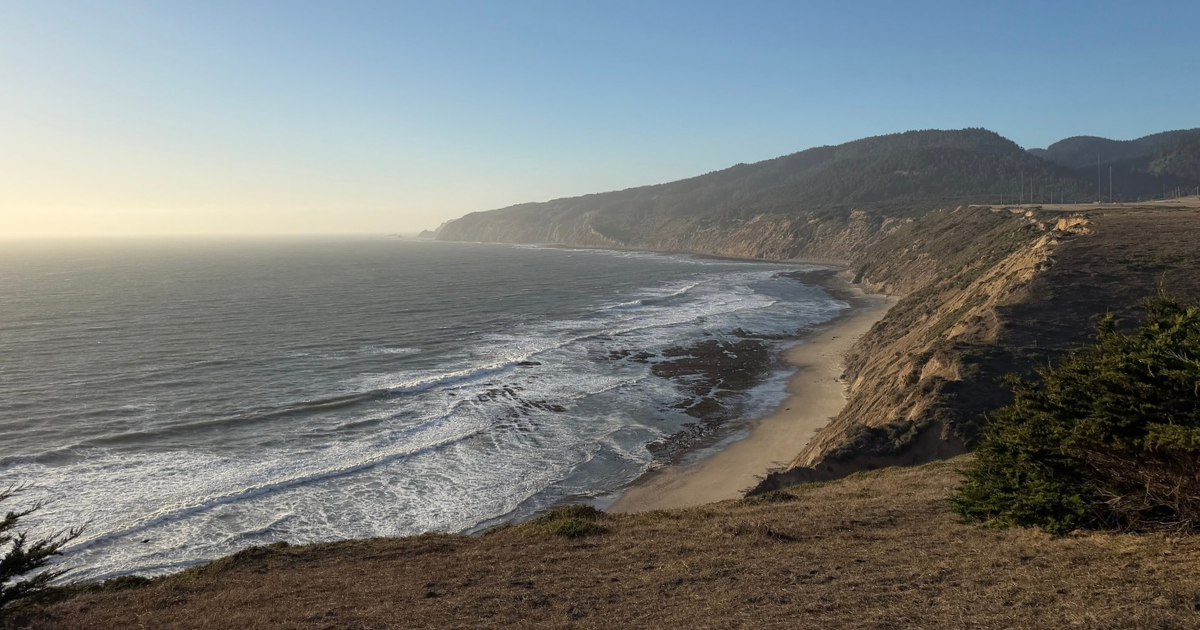
Duxbury Reef is one of the largest shale reefs in North America, home to over 200 different species. This unique, fossil- and ecologically rich biodiversity hotspot draws visitors, educators, and students from all over the region for tidepooling.
Unfortunately, large swaths of this special habitat still remain unprotected—the north is adjacent to crucial seabird nesting areas, contains one of the largest breeding harbor seal colonies in California, and contributes larvae and spores restoratively to disturbed and stressed areas along the coast. The south contains many rare and sensitive species and is an important resting area for marine mammals.
Fragmented protection of an ecologically connected habitat continues to put many species at risk of take and damage. Expanding the Duxbury Reef SMCA would have improved the design of this MPA for the protection of species, doubling the amount of rocky shoreline protected by this MPA.
Additionally, the language clarifications we requested may be at least partially addressed through a continued statewide public regulatory process to update rocky intertidal zone and tidepool definitions in the California regulations.
EAC thanks the Commission, CDFW, OPC, and Commission staff for their hard work evaluating MPA petitions and this creative solution, and we look forward to the upcoming opportunity to work with stakeholders. In the meantime, EAC will continue advocating for responsible stewardship at Duxbury Reef through improved signage and education through EAC’s locally-based Duxbury Docents program, established in 2022.
The multi-year petition process followed a decadal management review of California’s network of 124 MPAs, which are internationally recognized by the International Union for the Conservation of Nature. The network was established in 1999 through the Marine Life Management Act.
Learn more about EAC’s Duxbury Reef petition.
Environmental Action Committee of West Marin (EAC): Established in 1971, EAC’s mission is to protect and sustain the unique lands, waters, and biodiversity of West Marin through advocacy, science, education, and engagement.