By: Paige Herbert, Legal & Policy Intern
June Ocean Protection Council (OPC) Meeting
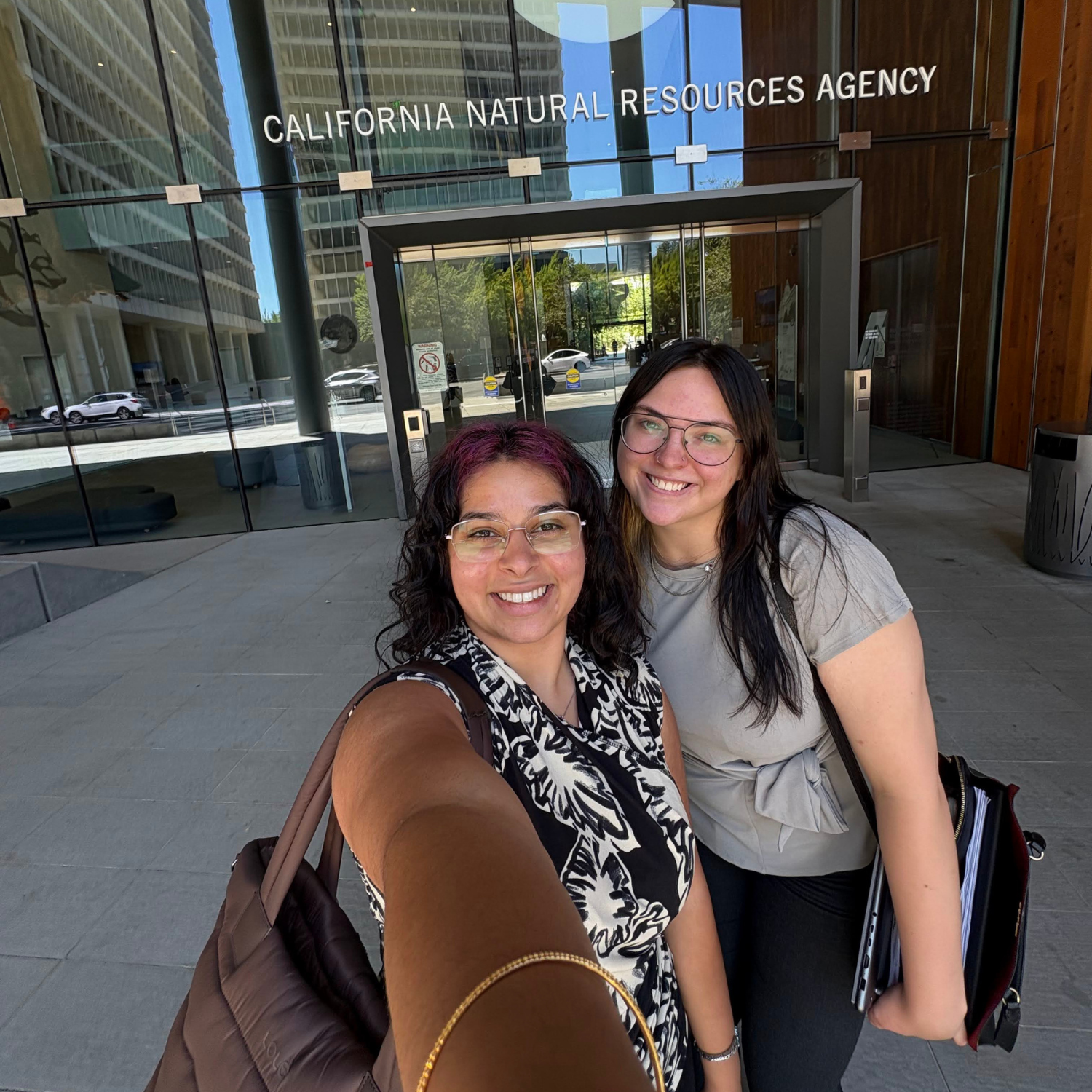
Last month, EAC’s Legal & Policy interns traveled to the Ocean Protection Council meeting in Sacramento to provide testimony on two topics.
Anna Bassias spoke to the importance of pursuing California’s 30x30 goals through marine protected areas (MPAs), which are increasingly important in light of climate change threats like sea level rise and marine heatwaves. Anna highlighted how fully protected MPAs provide more ecological benefits, and requested that OPC utilize the newest and best available science to inform future MPA management.
Paige Herbert commented on California’s Aquaculture Action Plan (Action Plan), which was adopted by the Council at the meeting after years of stakeholder engagement, including from a statewide coalition led by EAC.
EAC’s Role in Protecting Tomales Bay and Beyond
We have been invested in the protection of Tomales Bay and its water quality, sensitive habitats, and amazing wildlife for decades, advocating for the monitoring of development permits, recreational uses, aquaculture operations, and fisheries issues.
But the policies that ensure aquaculture is protective of coastal resources are often developed at the state level. This is why we lead a statewide NGO coalition focused on ensuring aquaculture in California happens sustainably and with the protection of vital habitats in mind. We have advocated for improved aquaculture practices on multiple projects for a number of years, including communicating our concerns and suggestions to agencies, participating in stakeholder meetings, sharing feedback on the draft Action Plan, and more.
What is California’s Aquaculture Action Plan?
OPC’s 2020-2025 Strategic Plan to Protect California’s Coast and Ocean aimed to develop a statewide Aquaculture Action Plan focused on marine algae and shellfish, as well as landbased/recirculating tank operations for marine algae, shellfish, and finfish by 2023. As this was delayed, the recent 2026-2030 Strategic Plan aimed to adopt a statewide Action Plan by 2026 and to fund three projects supporting the Action Plan by 2028.
Advocating for Improved Environmental Protections
Our coalition submitted comments to OPC urging further transparency of the Action Plan’s standards, definitions, and implementation criteria. We find it critical to outline the monitoring methods, frequency, and compliance requirements to address the potential environmental impacts from aquaculture activities. Following our March comments, OPC included precautionary language to avoid and minimize ecological impacts as well as acknowledging plans to prioritize improvements to aquaculture’s sustainability.
At June’s OPC meeting, Paige advocated for the need for better clean up at aquaculture sites:
“We specifically want to call out that lost plastic gear is still found on Tomales Bay, amplifying the need for continual clean up, gear marking, and best management practices.”
Holding aquaculture businesses accountable for the debris and property left behind will contribute to healthier waters and biodiversity. We commended the Action Plan’s inclusion of the removal of legacy debris from abandoned sites and for restoring sites to their original conditions when leases end.
We also emphasized the importance of public participation related to monitoring and compliance. Finally, we requested a more explicit exclusion of marine finfish from the final plan, to which OPC staff stated:
“While the plan does not explicitly exclude finfish aquaculture in marine waters, that is not the current focus of the plan, nor is it our current definition. None of the actions in this plan are targeted at marine finfish, and in fact there are a number of regulatory barriers that would limit any sort of finfish development in the ocean.” OPC's June Meeting - 3:14:19
We appreciate OPC’s commitment to exclude finfish from the Action Plan, which is a very important priority for EAC and our coalition. Marine finfish can harm the environment and wild fish through escapement, water quality degradation, parasites, and disease. While marine finfish is not the focus of the “current” plan, we will fight to ensure it is not considered in any future plans or updates, too.
OPC ultimately adopted the Action Plan without additional changes and voted to disburse funding for an Aquaculture Science Plan. We are excited that there is now a statewide framework to guide California’s growing aquaculture industry. We will continue to stay engaged to ensure any local aquaculture siting avoids impacts to eelgrass, shorebirds, and other sensitive coastal resources. We will also continue coordinating with partners statewide on this important issue.
Next Steps
Going forward, OPC will strive to improve governance, ensure environmental protections, and facilitate sustainable development of marine seaweed and shellfish aquaculture through the development of an Aquaculture Science Plan. The Science Plan identifies best available existing ecological and socioeconomic information related to aquaculture, as well as knowledge gaps and science needs. California Sea Grant (CASG) will partner with tribes, academic institutions, conservation organizations, and many others to develop the Science Plan. CASG will also convene a scientific panel to develop the Science Plan, including research and monitoring recommendations to address gaps.
Learn More
Healthy Tomales Bay
Take Action: Oppose New Shellfish Lease in Tomales Bay
March 2026 Coalition Comments
May 2026 Coalition Comments