By: Josie Campo, Communications Intern
The California Coastal Act celebrates its 50th anniversary this year, and EAC celebrates 55 years of our coastal protection work!
In the 1960s, rampant private development threatened public access to California’s coast—highways paved over sensitive habitats, railroad companies took strips of coastal land for their own possession, nuclear power plants were being proposed along the coast in earthquake-sensitive areas, and one company wanted to bulldoze the San Bruno Mountains to build condos. The current protections we enjoy today were not in place, and a growing number of people realized access to the coast could be lost forever. EAC was also forming during this time period: some of our earliest campaigns focused on protecting public lands in the newly created Point Reyes National Seashore, protesting the diking of Tomales Bay with a 50-vessel sail-in, and mobilizing community efforts in response to the Standard Oil Spill that devastated beaches and sensitive estuaries like Bolinas Lagoon.
The threat of losing our coastal habitats and access prompted Californians to rally together to “Save Our Coast” in 1972, launching a diverse and bipartisan coalition that proposed Proposition 20, which would enshrine in state law that “it is the policy of the State to preserve, protect, and where possible, restore the resources of the coastal zone for the enjoyment of the current and succeeding generations.” This proposition was passed by popular vote, leading to the creation of the Coastal Act in 1976 and the California Coastal Commission (Coastal Commission) to oversee it. “Many local government agencies opposed the Coastal Act, but the voters approved it by a 10-point margin,” recalls one of EAC’s partners, Jen Kalt, director of the Humboldt Baykeeper. Public engagement created the Coastal Act and has remained a critical factor in the Coastal Commission’s work since, as it is everyday people who speak up to protect our beaches and coasts from harm.
Since 1976, the Coastal Act has been responsible for protecting vast amounts of coastal land and ensuring public access. This landmark environmental law reaches its 50th anniversary this year, with many accomplishments to celebrate: over the past five decades, the Coastal Act has established over 3,500 access points to the coast, restored over 4,600 acres of habitat, and given local governments $30 million to prepare for sea level rise. The Coastal Commission has partnered with local governments, nonprofit advocacy groups like EAC, state and federal agencies, and more to make this amazing work happen.
In recognition of the Coastal Act and the stewardship that has kept California’s coast healthy and open to all, a resolution honoring its 50th anniversary was introduced in January 2026 by Senator John Laird and Assemblymembers Gregg Hart, Dawn Addis, and Steve Bennett. This resolution, which EAC is proud to co-sponsor, commemorates the landmark California law that has sustained our state’s coastal economy and marine ecosystems while affirming public coastal access as a fundamental right. As we face threats from climate change, sea level rise, and the federal government’s offshore oil agenda, we are reminded why the Coastal Act is necessary for the future. EAC reaffirms its commitment to the Coastal Act, actively supporting strong coastal protections that safeguard our delicate marine and terrestrial habitats, including fighting dirty offshore oil and for the protection of the Act itself.
California’s Coast, For Who?
Our coast faces several threats, including privatization, public access issues, and coastal armoring, or sea walls. Privatization, or the private control of the coast, often includes a lack of standards and regulations that negatively impact both people and the environment. Low-income communities and people of color are disproportionately denied access to the coast and have the most to lose from coastal privatization, which can also contribute to the declining state of coastal ecosystems. Fortunately, beaches along California’s 840-mile coast belong to the public.
Ensuring public access for our coasts is a priority of the California Coastal Act—and one of the main drivers of its creation. This is also a high priority for EAC. The Coastal Act guarantees public access up to the mean high tide line for all beachgoers—not just private property owners. In fact, the Coastal Commission has the authority to impose civil fines on private property owners who restrict public beach access.
Case Study: In 2020, the Coastal Commission ruled that “Private Property” signs posted by homeowners at a beach in Malibu unlawfully discouraged people from using the beach. The Coastal Commission champions public access and prevents private landowners from misleading the public into believing California’s beaches are private.
A Coast in Crisis: Shrinking Beaches and Climate Change
Besides privatization, another issue affecting coastal access is the erosion of our beaches and coastal squeeze, which occurs when beaches move landward and upward, contributing to the loss of coastal habitats. This is caused by a combination of factors, including climate change, our built environment, and dammed-up rivers. Climate change-induced sea level rise and powerful storms can directly destroy boardwalks and other beach entryways, making public access difficult. Additionally, climate change also contributes to the erosion of our beaches as waters rise and storms wash sand away. While beaches naturally move with changing sea levels, many coastal communities—homes, businesses, roads, or industry—are now blocking where sand would normally retreat to.
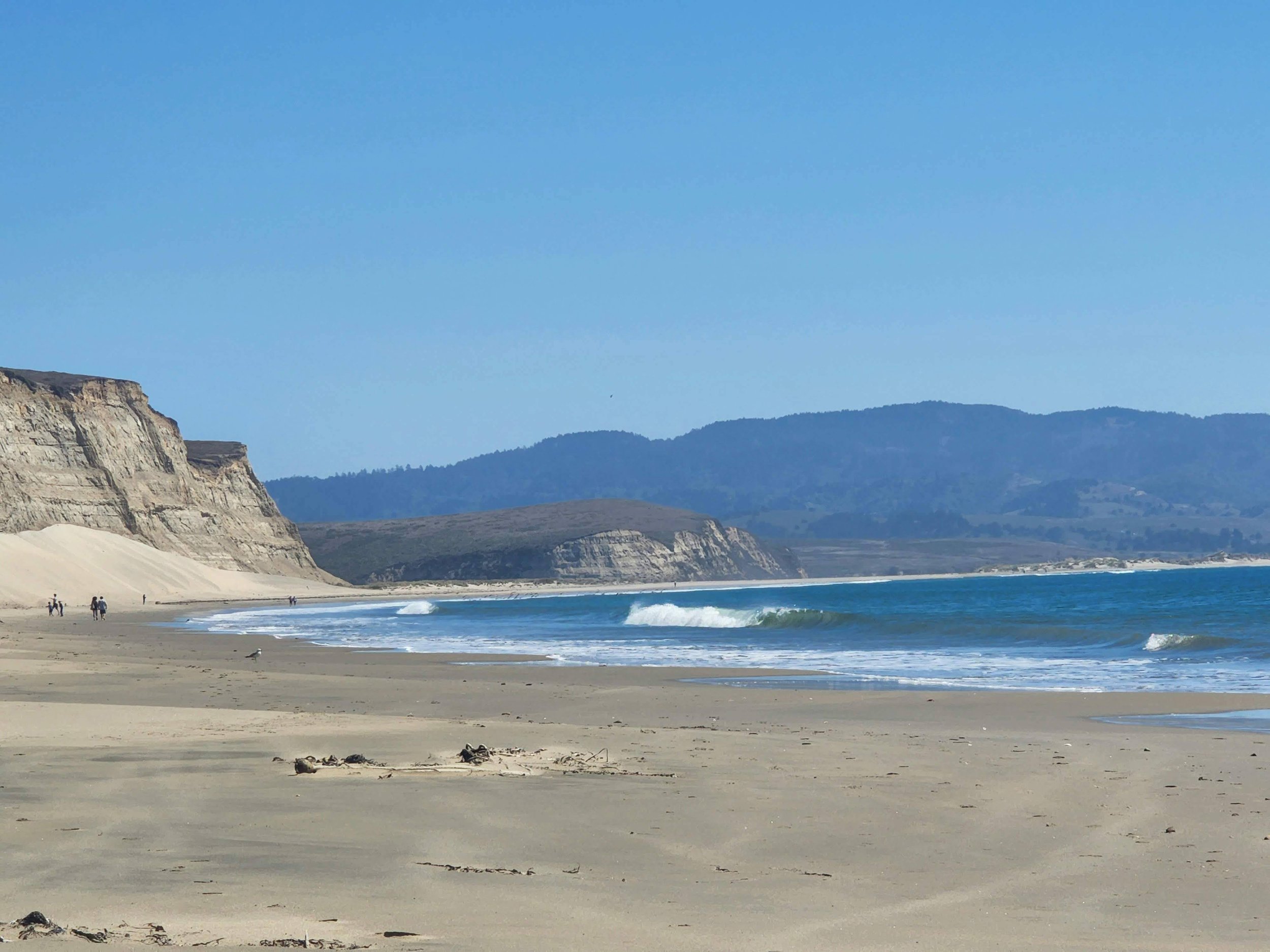
Beaches in Santa Cruz have lost a significant amount of sand, attributed to sea level rise, erosion, and the proximity of coastal infrastructure. And, because there is less sand on the beach to shield the coast, waves crash into Santa Cruz’s dirt cliffs all year, where they would normally do so only in winter. Walking paths are becoming more dangerous, flooding with water more often. Jon Warrick, a geologist at the Pacific Coastal and Marine Science Center in Santa Cruz, attributes the sand depletion to the winter storms of 2023 and 2024. After these storms, it can take beaches multiple years to recover to their original state. Unfortunately, climate change can “supercharge” winter storms, speeding up coastal erosion. You can also see coastal erosion of bluffs in Marin County.
Ironically, some of the things we do to combat sea level rise and erosion can inadvertently destroy our beaches. Over the years, coastal armoring has become more and more popular to protect coastal property. However, with these walls come consequences—like actually increasing erosion. Armoring changes the movement of sand along the coast so that beaches are unable to move inland. Waves and sea level rise ultimately consume the shore, depleting dry upper beach zones and reducing biodiversity in beach habitats. The Coastal Act has largely protected California’s coast from significant armoring by prioritizing non-structural solutions, restricting new armoring for future development, and allowing armoring only for existing threatened structures if impacts are mitigated. This ensures that our beaches don't face depletion, and habitats at risk of being “squeezed” are protected.
Pollution is another significant environmental threat to our coasts. Industrial pollution, like chemicals and heavy metals, and stormwater runoff, which carries contaminants from sewage and animal waste, seriously hurt our oceans and coastal habitats. Coastal Commission staff work to ensure projects in coastal areas integrate pollution prevention measures, providing educational resources and technical assistance to address developments that might create polluted runoff.
Celebrating the Coastal Act and Looking Towards the Future
The Coastal Act has enhanced public access, saved the coast from rampant armoring, and protected sensitive habitats and species. This landmark law ensures that California’s coasts belong to everyone—not only the mostly wealthy people who can afford to buy beachfront properties.
Several trends will affect California’s coast—and the way we manage it—going forward. With a growing population, forecasters predict 70% of California’s population will be living in coastal cities in the future. California’s population is also becoming younger and more diverse. Our governments and coastal laws will need to respond to the needs for increased affordable housing and the values and preferences of this changing constituency. Climate change is another challenge; rising temperatures and sea levels place a toll on coastal communities by threatening infrastructure, damaging economies, contaminating fresh water, and reducing coastal access. However, these needs are not mutually exclusive—affordable housing and coastal protection can be achieved together. Recent legislation—supported by an array of housing and environmental groups (including EAC), as well as the Coastal Commission—will advance affordable, infill housing development in our coastal cities while preserving environmental protections.
By treating the Coastal Act as a living framework rather than a barrier, we can ensure that the California coast remains a place where people can actually afford to live and recreate.
How to Make a Difference in Your Community
Want to celebrate the Coastal Act and support legislation that will protect our coasts for all? Join EAC at Ocean Day and bring your love of the ocean to Sacramento on April 28th, 2026! You don’t need to be an expert in ocean policy to learn how to advocate at Ocean Day—simply sign up by April 14th, and you’ll be placed in a team with an experienced advocacy leader who will guide you through the day, with plenty of resources to learn about 2026 legislative priorities. You’ll also get to meet fellow activists, artists, and decision-makers across the state. Ocean Day occurs annually in late Spring—if you can’t make it this round, sign up next year. You can also celebrate World Ocean Day on June 8th!
Additionally, learn how to become a dedicated steward of local water resources through EAC’s Community Water Advocacy Guide. It provides essential knowledge on legal frameworks, enforcement agencies, information sources, and practical steps to safeguard water quality and protect coastal lands and waters, ensuring your community's voice is heard.
Getting involved with local organizations that work to protect our shared coast, like EAC, is also a way to support healthy oceans for all. Whether you’re cleaning up litter on your favorite beach, volunteering, or supporting our work, there are plenty of current issues to take action on.
On the 50th anniversary of the Coastal Act, commit to doing one small action to support a clean, healthy, and accessible coast for all!
Learn More
Safeguarding Our Coast and Ocean Blog