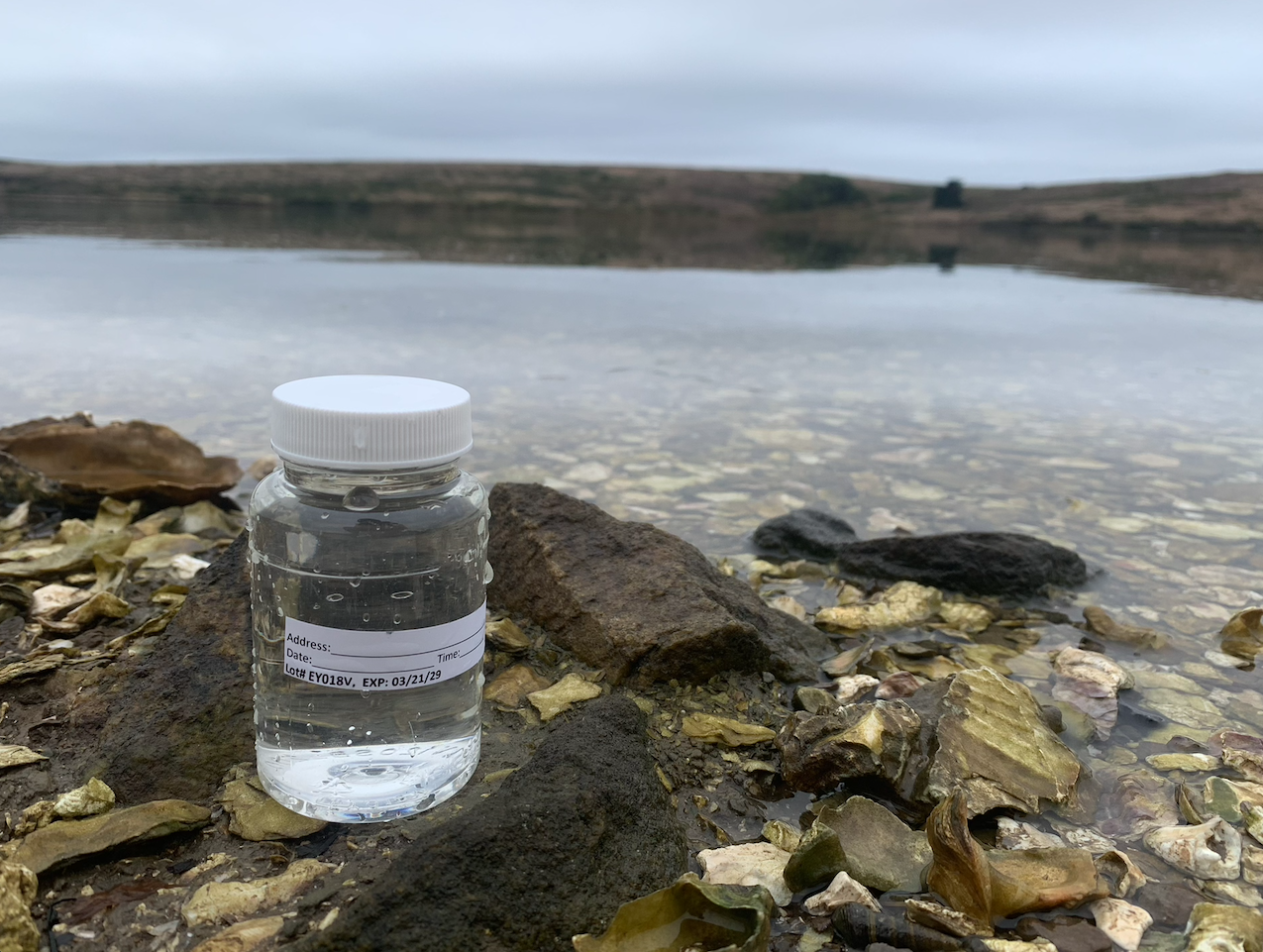
Water sample taken at Drakes Estero.
When you head to the beach, launch a kayak, explore an estuary, or spend a day on the water in West Marin, you want to know whether that water is safe.
Thanks to support from the Mary A. Crocker Foundation and supporters like you, we help provide the scientific monitoring, volunteer coordination, advocacy, and education necessary to turn water quality data into public information, informed policy, and a healthier watershed for humans and wildlife alike.
Many are surprised to learn that some of West Marin's waterways are impacted by pollution from sources like agriculture, septic systems, and stormwater runoff. These pollutants can introduce harmful bacteria into waterways, creating potential health risks for swimmers, surfers, paddlers, anglers, and families enjoying the coast.
Partners in Action
In 2020, we restarted water quality sampling at Drakes Beach and Drakes Estero in partnership with the National Park Service and Marin County Environmental Health Services (EHS). Samples are tested for indicator bacteria that can signal the presence of pathogens that make people sick.
Throughout the year, EAC staff and volunteers collect samples at these locations, providing important data to Marin County’s Beach Water Quality Monitoring Program, which alerts beachgoers when recreational waters contain harmful pathogens. When results exceed public health standards, warning signs are posted to help protect the public, and results are posted on the County’s website. This sampling also contributes to a long-term dataset that informs us when and where there are ongoing pollution issues in recreational waters—and collecting data is just the first step. Watch our sampling in action!
How We Advocate & Educate
While samples are taken weekly during the recreation season (March - October), water conditions can change rapidly day to day, especially after it rains. And, laboratory processing means results are at least 24 hours old by the time they become public.
We strive to share water quality exceedances in West Marin on our Instagram and Facebook as soon as we get results. This timeliness is critical for those visiting our coast, especially when the County website updates are delayed.
We’ve also consistently advocated to Marin County EHS for improved public access to water quality information, including more timely posting of exceedances on County websites, greater transparency in reporting test parameters, and expanded public notification systems so people can make informed decisions about when and where they recreate. We know their staff capacity is limited, so we will continue to amplify the results.
By sharing these results, we provide greater accountability, help inform management needs, and better inform the public. We also work behind the scenes with key partners and agency staff to discuss solutions to water quality issues. In past years, we successfully advocated to the California Coastal Commission to require the National Park Service to develop a Water Quality Strategy at Point Reyes National Seashore, and for annual reporting to inform the public of what is being done to combat pollution, increasing transparency. This continues, and the National Park Service is currently working on the Water Quality Strategy.
Our advocacy helps ensure public agencies, land managers, and policymakers make informed decisions to safeguard coastal resources and public lands. Because of foundation and individual support, more people can enjoy West Marin's beaches, bays, and waterways with greater confidence.
Learn More:
EAC’s Water Quality Sampling
Marin County’s Beach Water Monitoring Program
Find water quality exceedances on EAC’s Facebook & Instagram